0
Skip to Content
반달
반달

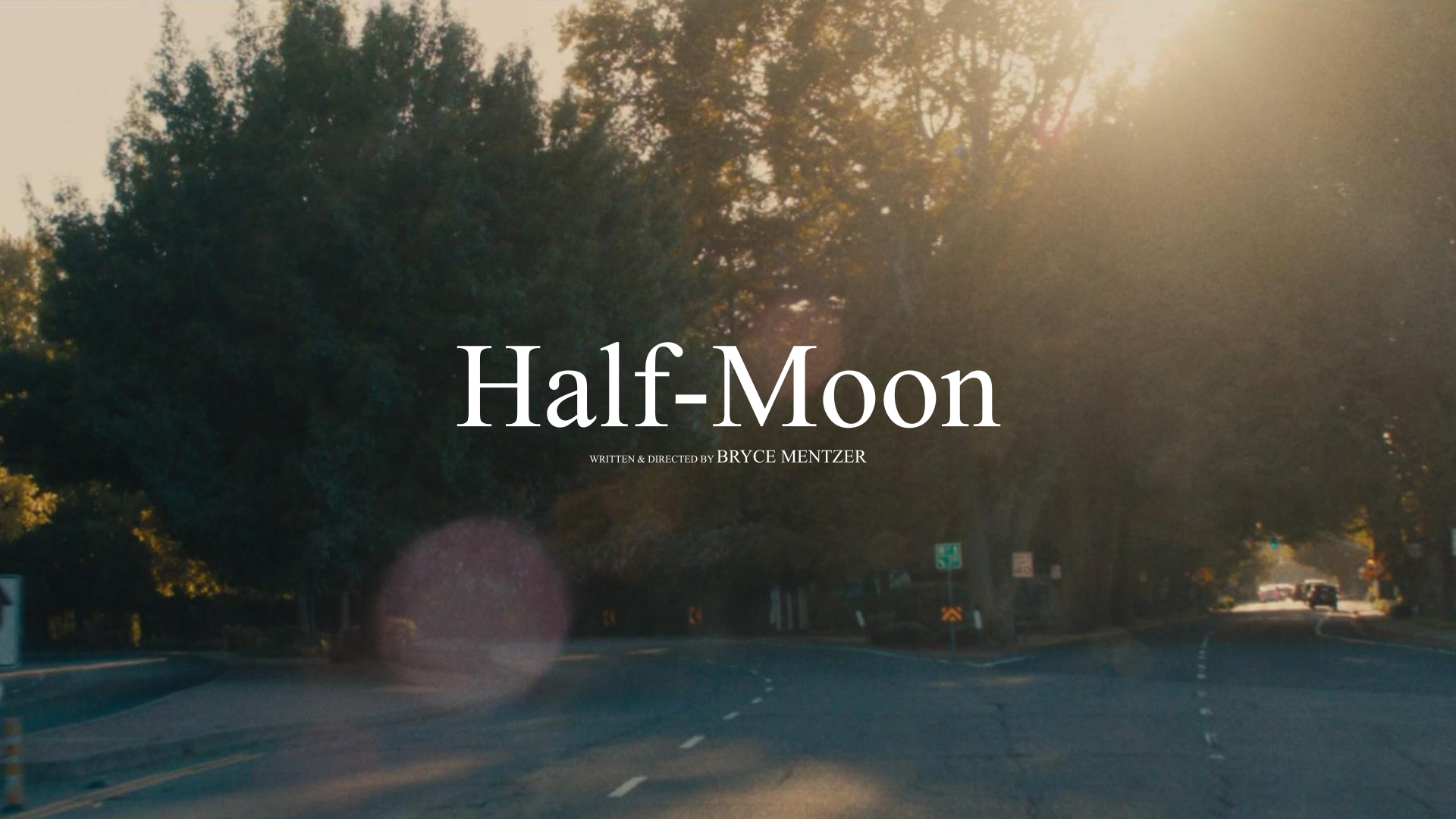
Half-Moon is a short, slice of life film about the particular loneliness of being raised by people who love you completely and understand you only partially and what happens when you find something that speaks to the part of you they never could. Through intimate moments and visuals that stay out of the way and let the actors and spaces carry the weight, the film moves from disconnection toward something harder to name and closes without any resolution, reflecting the vast, unfinished complexity of adoption.

Half-Moon is an intimate, character-driven short film about identity, adoption, and the divide between where we come from and where we belong.

Set over the course of a single day, a Korean adoptee finds a handwritten recipe from his birth mother and finally sits with the disconnection and grief he's carried his entire life.

Half-Moon's mission is to tell a story about the complexity and nuance of what it means to be adopted, to be Asian in America, and to be loved and still feel the ache of never being full known. The film exists to find people quietly carrying that weight and tell them they are allowed to feel it all.

Tyler is a Korean adoptee in his 20's and has spent his entire life moving through a world that he knows loves him but doesn’t actually know him.

On an unremarkable Sunday morning in rural Pennsylvania, he returns after a long night to his parent’s home. He’s possibly hungover, unmoored, and going through the motions of being a son. After his parents leave for church, he goes to the basement to find an insurance folder for his mom. Instead, he finds a piece of aging paper tucked inside his adoption file, covered in Korean script he cannot read, with a small crescent moon drawn on the back.

It looks like a recipe.

What follows is a quiet act of grief and discovery: Tyler tracks down a translation through an online adoptee forum, sources unfamiliar ingredients, and teaches himself, alone in his mother's kitchen, how to make Songpyeon, traditional Korean rice cakes shaped like half-moons, made for Chuseok, a harvest festival he has never celebrated or even heard about. His cooking is imperfect and the rice cakes come out a bit dense and a little wrong, but he sets a table for one anyway.

When his parents return, his mother tastes one without knowing what she's tasting, she tells him it needs more sugar. She sets it down and moves on about her normal life. She doesn't know she just walked through one of the most significant moments of her son's life and came out the other side just thinking about putting away the groceries. Tyler says nothing. He dumps the rest in the trash, saving one, and walks down the hall carrying something he has no words for yet, only a grief he didn't know he was allowed to have, and for the first time in twenty-eight years he lets himself cry about this. As he holds the Songpyeon in one hand and the recipe in the other, he thinks about a woman somewhere on this planet who once drew that shape on the back of this piece of paper and he doesn't know if she's alive, if she ever thinks of him, or if she's looking at the same moon he is.

Half-Moon is a film about the gap between being loved and being known. About the things inheritance can't reach. About a man who is too Korean for one world and not Korean enough for another, sitting alone in the room those two worlds built for him and making space, finally, for the grief he was never given permission to feel.

There are very few stories about what it feels like to grow up Korean in rural Pennsylvania. Fewer still about what it feels like to grow up as a Korean adoptee in rural Pennsylvania and not speak your natural language, not know the food of your ancestors, not even know how to use chopsticks. I spent most of my life feeling like I was the only person in the world who felt how I felt. I looked for myself in film and television and I couldn’t find myself there.There were no stories for me. No characters who looked like me or who grew up the way I grew up.

That absence does something to a person. It teaches you that your particular grief is too complicated to deserve a story. That the sadness you carry alongside the gratitude is something to manage privately, something to be careful about, something that might sound ungrateful if you said it out loud in the wrong room.

I wrote Half-Moon because I needed it when I was younger and it wasn't there. I want to create it for the kid who grew up the way I grew up and couldn't see themselves in a single story that made them feel like their grief was real and valid and allowed. I wrote it for every adoptee who has ever swallowed something complicated because they didn't have the vocabulary for it, or because the people who loved them most were the same people they couldn't say it to.

This film is permission to feel the thing you've been holding, permission to grieve what you never had, even when what you have is good, and permission to sit in the room with all of it, the love and the loss, the gratitude and the grief, and just feel.

I want to make this so that someone sees it and feels, maybe for the first time, like they are not alone in that feeling.

Half-Moon lives in the register of films that trust their characters completely, that find something special inside the mundane, and that understand stillness as its own form of dramatic tension. It is a film about the quiet weight of family, what is passed down, what is withheld, and what lives in the space between.

The visual language is intimate and unobtrusive. We are not here to aestheticize Tyler's pain, only witness it. Shots are held long enough for the actor to tell their truth and the edit does not rush to rescue the audience from discomfort. We sit in the silences because the silences are where the film actually lives.

This is not a heavily produced film. The camera is intimate with intentional movements with naturalistic light where possible, the handheld sensibility adds to the emotional arc, and the film is accompanied by an overall palette that reflects the average stillness of a Pennsylvania Sunday.

Lawrence Shou is a young Asian American actor from Fremont, California, best known for his starring role in “Rosemead” alongside Lucy Liu. Lawrence was specifically singled out for his performance in his feature debut, winning the Breakout Actor in Film Award at the 23rd annual Unforgettable Awards. He is deeply passionate about filmmaking, particularly stories surrounding the Asian American diaspora and mental health, both of which are deeply rooted in his personal life. To Lawrence, “Half-Moon” is another way to give a voice to the Asian American experience, particularly that of a young Asian adoptee growing up in the Midwest, something traditional Hollywood media has not typically focused on.

Bryce Mentzer picked up a camera around age five and never really put it down. Adopted from Daegu, South Korea and raised in South Central Pennsylvania, he grew up between worlds and developed an early instinct for what it means to look closely at something and try to understand it. A decade of commercial, corporate, and documentary work built a strong foundation but making narratives that carry genuine and emotional weight was always the goal. Half-Moon is where the filmmaker, stories, and life experience he has always carried finally get to exist in the same place at the same time.

Half-Moon

Sign up with your email address to receive news and updates.

Thank you!

About Contact Follow